Which exam are you having today?

Search by exam name and go straight to the right preparation.

Your examsAccess your reports onlineSign in with email and password to view and download the exams your clinic shared.Sign in / create account Happy pregnant woman holding her belly in a warm, intimate room. Pregnancy guidePregnant? Find everything here!Track your pregnancy for free, log your exams, follow the pregnancy week by week and organize your timeline.Gestational age & due dateWeek by weekLogged examsBaby namesOpen pregnancy hub
Before the exam

I am having this exam — what should I know?

Preparation, what to bring, and what to expect on the day, in short and direct answers. This is educational content and does not replace instructions from the clinic responsible for your exam.


Abdominal ultrasound: do I need to fast?

In general, 6 to 8 hours without food help the liver and gallbladder be seen more clearly. You may drink water, and you usually take your regular medicines with a sip of water.

Pelvic ultrasound: why a full bladder?

A full bladder moves the bowel away and works like a window to see the uterus and ovaries. Drink water beforehand and hold your urine. For transvaginal ultrasound, it is the opposite: the bladder should be empty.

Thyroid ultrasound: is there any preparation?

No fasting and no full bladder are needed. Avoid necklaces and high collars because the exam is done on the neck. It is quick and painless.

Breast ultrasound: how should I prepare?

No fasting. On the day, avoid cream, talc, or deodorant on the area. If you have prior exams, bring them: comparison helps.

I am pregnant: do I need preparation?

It depends on the stage. Early in pregnancy, a full bladder may be requested; later, usually not. Follow your clinic instructions and bring your prenatal exams.

Kidney ultrasound: do I need to drink water?

A full bladder is often requested: drink water beforehand and hold your urine so the bladder and emptying can be assessed. Fasting is usually not necessary.

Venous Doppler of the legs: how do I prepare?

Usually no preparation is needed. Wear comfortable clothes that uncover the leg easily. The exam checks circulation and is not painful.

What should I ask before and after?

Before: do I need preparation? can I take my medicines? After: when will the report be ready and who will explain the result? Writing down questions beforehand helps a lot.

Educational content. It does not replace medical consultation or instructions from the clinic responsible for the exam.

After the exam

Understanding your exam result

What each report term means, without panic. Remember: the report is one piece of the puzzle — your doctor puts everything together and decides the next step.


My report says I have a nodule. What now?

A nodule does not mean cancer — most are benign. The report often includes a category, such as TI-RADS or BI-RADS, to guide whether follow-up or investigation is needed. Your doctor decides the next step.

What is TI-RADS in a thyroid report?

It is a 1-to-5 scale that organizes thyroid nodule features and suggests when puncture may be useful. A higher number means more attention, but only your doctor can define management after seeing the whole picture.

What is BI-RADS in a breast report?

It is the classification of breast findings from 0 to 6. Categories 1 and 2 are reassuring; from 3 onward, follow-up or evaluation may be needed. The number guides care; it is not a final diagnosis by itself.

How do I understand a thyroid report?

The report describes the gland size, texture, and nodules. Terms like echogenicity and margins are image features. The most important summary is usually in the conclusion.

A cyst appeared. Should I worry?

A cyst is a small fluid-filled sac — almost always benign and common in the kidney, liver, breast, and ovary. The report says whether it is simple and reassuring or deserves follow-up.

The report mentions an “incidental finding.” Is it serious?

It means something found along the way, unrelated to the reason for the exam. Often it is not important, but the report may suggest confirming it with your doctor for peace of mind.

Educational content. It does not replace medical consultation or your doctor’s interpretation.

I received a diagnosis

I was diagnosed with this — what should I know?

Common findings explained calmly. Most are frequent and benign — the important part is understanding them and following up with your doctor.


Gallstones: what now?

Gallstones are very common and do not always cause symptoms. When they cause pain, especially after fatty meals, treatment should be discussed. Ultrasound shows size and number well.

Fatty liver: is it serious?

Fatty liver means fat accumulated in the liver — it is common and, early on, reversible. It often improves with diet, physical activity, weight control, and glucose control. Your doctor assesses the grade and follow-up.

I have a fibroid. What does that mean?

A fibroid is a benign nodule of the uterus and is very common. Many cause no symptoms and are only followed; others may need treatment depending on size and symptoms. Ultrasound measures and locates each one.

Ovarian cyst: should I worry?

Most ovarian cysts are functional and disappear on their own over a few cycles. Ultrasound describes the type, and your doctor decides whether to repeat the exam or investigate further.

Thyroid nodule: is it cancer?

Thyroid nodules are very common and almost always benign. The report uses TI-RADS to guide follow-up or puncture. Most only need periodic monitoring.

Lump in the neck: what could it be?

A lump in the neck is often a lymph node reacting to an infection and improves on its own. Ultrasound helps differentiate. Seek evaluation if it grows, feels hard, or does not go away.

Educational content. It does not replace medical consultation or follow-up with your doctor.

Complete guide

Everything you need to know about your exam

An overview of each ultrasound: what it evaluates, how it is done, and what to expect. Choose yours and open the full guide.


Thyroid ultrasound
Thyroid ultrasound

Evaluates gland size and looks for nodules. It is quick, painless, and uses no radiation. Most findings are benign and only need follow-up.

Abdominal ultrasound

Evaluates the liver, gallbladder, bile ducts, pancreas, spleen, and kidneys. Fasting is often requested, and it is a first-line exam for many abdominal pains.

Breast ultrasound
Breast ultrasound

Complements mammography, especially in dense breasts and younger women. It helps distinguish cysts from solid nodules, without radiation.

Kidney and urinary tract ultrasound

Evaluates the kidneys, bladder, and urine emptying. It helps investigate stones, cysts, and difficulty urinating. A full bladder is often requested.

Prostate ultrasound
Prostate ultrasound

Measures prostate volume and evaluates the bladder and urine left after voiding. It may be abdominal, with a full bladder, or transrectal, depending on your doctor’s indication.

Pregnancy ultrasound

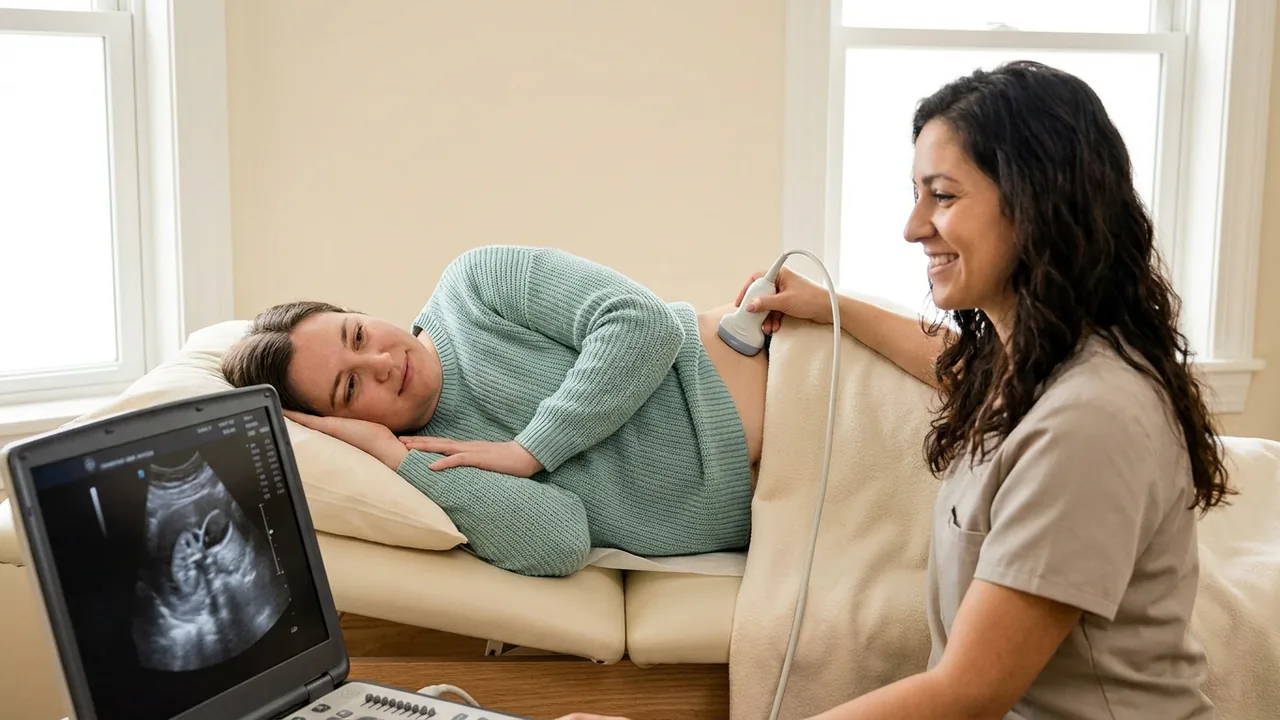
Follows the baby at each stage — from confirming pregnancy to growth and well-being. See what each exam evaluates trimester by trimester.

Educational content. It does not replace medical consultation or the indication for your exam.

When to do it

When should each exam be done?

General guidance on the timing of each ultrasound. The final indication always belongs to your doctor, according to your symptoms and history.


When should thyroid ultrasound be done?

Usually when there is a palpable nodule, altered thyroid hormones, or to follow known nodules. Your doctor defines the interval for your case.

When should breast ultrasound be done?

To investigate a finding, complement mammography in dense breasts, or evaluate younger women. Frequency depends on your history and medical guidance.

When should abdominal ultrasound be done?

It is indicated for abdominal pain, suspected gallstones, liver test changes, or as routine when requested by your doctor.

When should prostate ultrasound be done?

It often becomes part of evaluation after age 50, or earlier with family history, or when urinary symptoms are present. Talk with your doctor about the best timing.

When is the first pregnancy ultrasound?

It is usually between 6 and 8 weeks to confirm pregnancy. Start prenatal care as soon as you know — then follow a trimester calendar.

When do I need to repeat an exam?

Many benign findings only need follow-up: the report or your doctor will indicate when to repeat it. Keep previous exams for comparison.

Educational content. It does not replace medical consultation or the indication for your exam.

Preparation by exam

  • Fasting is usually requested for gallbladder, biliary tract, pancreas, and retroperitoneum
  • Fasting time is generally around 6 to 8 hours, depending on the clinic
  • Maintain continuous-use medications, unless otherwise instructed by a doctor
View complete preparation

7 things you need to know